
How Often Should Pittsburgh Homeowners Clean Their Drains and Inspect Their Sewer Line?
Some home-maintenance tasks follow predictable intervals. Drain and sewer maintenance is different: timing depends on the property’s plumbing, history, and current performance. A Pittsburgh home with no drainage problems may not need the same services as an older home with mature trees and recurring roots.
There is no single cleaning interval for every home. Sewer Flow LLC recommends an annual assessment of sewer and drain conditions, but actual cleaning and sewer camera inspection frequency should depend on symptoms, past findings, pipe condition, nearby trees, and a technician’s recommendation. Known problems or sudden changes should be addressed before the next scheduled review.
An annual assessment is a planning checkpoint—not automatic annual cleaning or camera inspection. A professional reviews the home’s history and drainage behavior, then recommends cleaning, inspection, repair, or monitoring based on evidence.
Before building a sewer maintenance schedule, separate the services that are often described simply as “sewer maintenance.”
Everyday care limits avoidable buildup: use strainers, keep grease and food scraps out of drains, flush only toilet paper, and notice drainage changes. These habits cannot prevent every clog or correct pipe damage.
Professional fixture or branch-drain cleaning
This addresses a clog or buildup in a fixture or nearby branch line. Timing should follow symptoms and findings, not a generic calendar.
Main line cleaning removes roots, grease, sludge, scale, or other obstructions from the larger wastewater pipe. Snaking, root-cutting equipment, or hydro jetting and drain cleaning may be considered depending on the blockage and pipe condition. Hydro jetting is not suitable for every pipe.
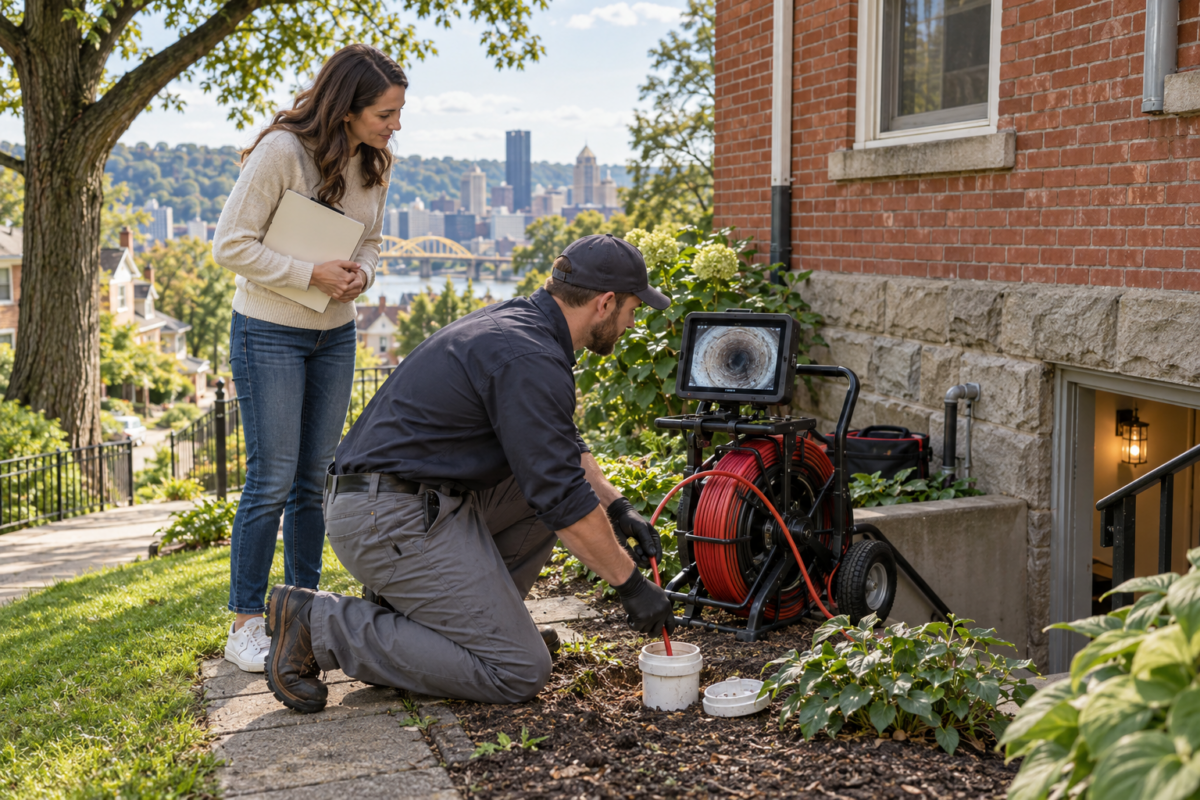
A camera documents visible conditions and may explain repeated problems. It neither cleans nor repairs the pipe. Symptoms, history, or known risk should justify its use; heavy blockage or standing wastewater may need clearing first.
The table below is a starting point, not a substitute for evaluating the property.
| Risk level | Typical property profile | Practical schedule |
|---|---|---|
| Low risk | No known problems, no symptoms, newer or documented system | Review drain performance throughout the year and discuss system condition during an annual professional assessment. Do not schedule automatic cleaning or camera work without a reason. |
| Moderate risk | Older home, unknown sewer history, mature trees, or aging clay/cast-iron piping | Arrange an annual professional assessment. Establish a camera baseline when history or condition warrants it, then set future timing from the findings. |
| High risk | Prior root intrusion, repeated backups, known belly or offset, recurring grease buildup, or heavy use | Follow a written plan based on documented recurrence and pipe condition. Cleaning or inspection may be needed more often than annually, but the interval should be property-specific. |
| Prompt service needed | Multiple slow fixtures, cross-backups, basement floor-drain backup, sewage odor, or sudden drainage change | Do not wait for the next maintenance date. Limit water use when a backup is possible and request professional evaluation. |
Sewer Flow LLC recommends having sewer and drain conditions assessed each year as part of routine sewer maintenance. That recommendation creates a regular opportunity to review risk. It does not mean every visit must include cleaning, camera work, or repairs.
How often should drains be cleaned? Let their performance and service history guide the answer. Professional cleaning may be appropriate when a kitchen, bathroom, laundry, or floor drain repeatedly slows; when several fixtures sharing a branch develop problems; or when a building’s use consistently produces buildup.
A busy kitchen or rental with several occupants may develop buildup faster than a lightly used home, but usage alone does not set a reliable interval. Record when drains slow, what cleaning revealed, and how long normal flow lasted. That history supports a better preventive drain-cleaning plan.
Good habits may extend the time between service calls, but cannot overcome corrosion, roots, poor slope, or other physical problems.
An annual sewer assessment is not necessarily an annual camera inspection. Consider camera work when it is likely to answer a specific question, such as:
What is causing clogs or backups to return after cleaning?
Why are multiple fixtures slowing or backing up?
Have roots entered a line near mature trees?
Is a known belly, offset, scaled section, or damaged joint changing?
What condition is an older line in when its history is unknown?
A baseline inspection may help with an older home or undocumented sewer history. Findings guide future timing: a clear line may need only monitoring, while roots or a trouble spot may justify technician-recommended follow-up.
Camera inspection can also inform a real-estate purchase. See Sewer Flow LLC’s guides to sewer inspections when buying a home and what a sewer camera inspection can reveal.
Two neighboring homes may need different plans. Important factors include:
Together, these factors establish risk and the value of monitoring, cleaning, or inspection.
A simple record can make future recommendations more precise:
Pay special attention to several drains slowing together, water rising in a tub when a toilet flushes, a basement floor drain backing up, persistent sewage odors, or a sudden change in drainage. These main-line backup warning signs should override the calendar.
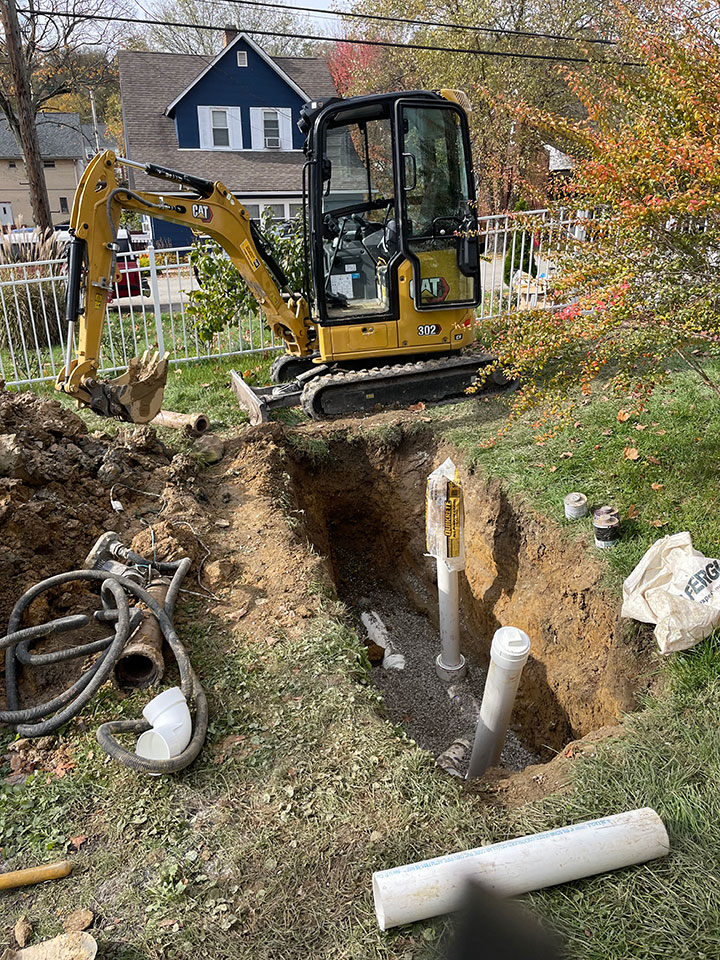
An assessment identifies the home’s history, current symptoms, and risk factors. Cleaning addresses buildup or an obstruction. Camera inspection documents visible pipe conditions and may explain recurrence. If the problem is structural, repair—not repeated cleaning—may ultimately be needed.
The best plan records findings and outcomes. If roots return after a documented period, that evidence helps set the next interval. If a camera shows a serviceable line and the home has no symptoms, monitoring may be appropriate.
If you are unsure how often your sewer lines should be cleaned, start with the property rather than the calendar. Gather past service dates, camera footage, notes about recurring symptoms, and the location of any known problem areas.
Call Sewer Flow LLC at (412) 515-FLOW or use the online contact form to discuss an individualized drain and sewer maintenance plan for your Pittsburgh-area home. The appropriate next step may be cleaning, camera inspection, repair evaluation, or simply continued monitoring based on what the system shows.
Not automatically. Sewer Flow LLC recommends an annual assessment of sewer and drain conditions, but cleaning should respond to buildup, obstruction, recurring symptoms, past findings, or a property-specific maintenance plan.
No. An assessment reviews symptoms, history, risk factors, and current condition to decide whether action is needed. A camera inspection is one diagnostic tool that may be recommended, not an automatic part of every annual review.
There is no universal interval. A technician should consider how extensive the roots are, how quickly they returned after prior clearing, the pipe’s condition, and whether repair is appropriate. Documented recurrence is the best basis for timing.
No. Cleaning may remove material restricting flow, but it does not repair cracks, offsets, bellies, corrosion, separated joints, or collapsed pipe. Structural problems require separate evaluation and, when appropriate, repair.
Request prompt service for multiple slow drains, fixture cross-backups, a basement floor-drain backup, sewage odors, repeated gurgling, or a sudden change in drainage. Reduce water use if a backup is possible. If sewage is present, avoid contact and seek professional assistance.