
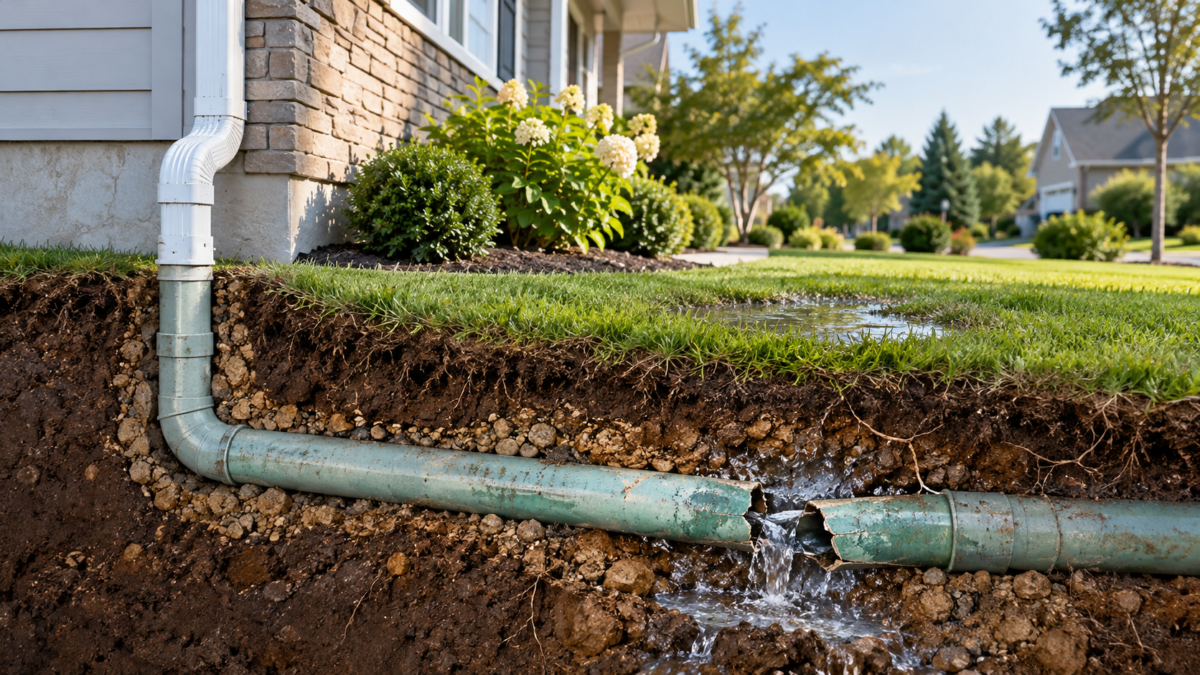
An underground downspout drain may be broken if rainwater repeatedly backs up where the downspout enters the ground, pools beside your foundation, or creates an unusually wet patch above the buried pipe. Clogs can cause the same warning signs. A professional inspection can determine whether the pipe needs cleaning, localized repair, or replacement.
Unlike visible gutters and downspouts, underground drainage pipes are hidden beneath soil, landscaping, sidewalks, and sometimes driveways. When something goes wrong, homeowners may see the effects of the problem without knowing exactly where the water is getting stuck.
At Sewer Flow LLC, we help Pittsburgh-area homeowners identify problems with buried drainage systems and determine the appropriate solution. Our underground downspout drain repair and replacement services address blockages, deteriorating pipes, and damaged underground drainage connections.
Understanding the warning signs can help you recognize when a drainage problem deserves professional attention before it contributes to more extensive water damage.
What Does an Underground Downspout Drain Actually Do?
An underground downspout drain carries rainwater from your home’s gutter system through buried piping to a designated drainage location. Its purpose is to move roof runoff away from the immediate foundation area, where excess water can contribute to basement moisture, soil erosion, and other drainage problems.
The system begins at the roof. Gutters collect rainwater and direct it into vertical downspouts along the exterior walls. When a downspout connects to underground piping, the water enters a buried drain that carries it toward an appropriate outlet or stormwater management feature.
Depending on the property, this might involve a surface discharge point, an underground storage or infiltration system, or another approved drainage arrangement. Some older properties have different historical connections. Not every Pittsburgh home has the same drainage configuration, and underground downspout pipes should not automatically be assumed to connect to a sanitary sewer.
Even a modest rainstorm can send a substantial amount of water through this system. For example, one inch of rain falling on 1,000 square feet of roof produces approximately 623 gallons of water before accounting for losses.
We explore these volumes further in our article explaining how much water can overflow from clogged gutters.
When the buried pipe cannot carry that water to its intended destination, runoff may escape at the downspout connection or accumulate underground.
What Are the Signs of a Broken Underground Downspout Pipe?
A damaged underground drain does not always produce an obvious warning. Some problems become noticeable only during heavier rain, while others develop gradually as the pipe deteriorates.
Several conditions can indicate that something is preventing water from moving through the buried drainage system.
Water overflowing where the downspout enters the ground
One of the clearest warning signs is water spilling out around the connection between the vertical downspout and the underground pipe.
If the buried drain cannot carry incoming rainwater away quickly enough, water may rise inside the pipe and escape at its entrance. This can happen because of a severe clog, a collapsed section, an outlet restriction, or another drainage problem.
Overflow at this location does not automatically mean the pipe is broken, but repeated backups deserve investigation.
Persistent puddles near the foundation
Water collecting beside your home after rainfall may indicate that an underground pipe is leaking, blocked, or discharging improperly.
When water escapes from a cracked or separated pipe, it can saturate the surrounding soil. If this occurs close to the foundation, that additional moisture can contribute to basement dampness or water intrusion.
However, surface grading, overflowing gutters, and saturated ground can produce similar conditions. The location of the water alone cannot establish the cause.
Unusually wet areas along the buried drain
A recurring wet patch in an otherwise drier yard can suggest that water is escaping from an underground drainage pipe.
Homeowners may notice soft soil, localized settlement, or a strip of ground that remains damp longer than surrounding areas. These symptoms become more meaningful when they follow the approximate route of a buried drain and appear consistently after rainfall.
Erosion or sinking soil
Escaping water can gradually carry soil away from around a damaged pipe. Over time, this may contribute to depressions, exposed fittings, or movement around the downspout connection.
More significant settling can indicate a problem that requires prompt evaluation, particularly near foundations, sidewalks, and driveways.
Water appearing where it normally does not
A buried drainage problem may also reveal itself through unexpected water discharge farther from the downspout.
For example, runoff may emerge through a separated pipe joint, collect near a walkway, or fail to appear at a previously functioning outlet.
These symptoms offer clues about the problem, but confirming underground pipe damage usually requires examining the drainage system itself.
Can a Clog Look Like a Broken Underground Drain?
Yes. A clogged underground downspout drain can behave almost exactly like a broken pipe.
Leaves, small twigs, roofing debris, sediment, and other materials can enter underground drains over time. As these materials accumulate, they restrict the available space for water to pass through.
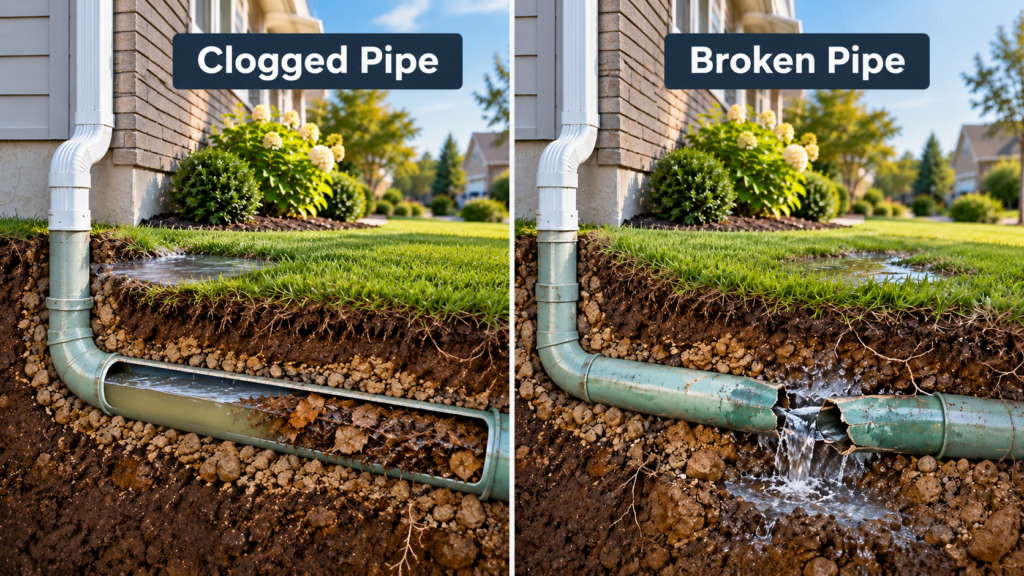
During light rainfall, a partially obstructed pipe might still move enough water to appear functional. During a heavier storm, the same restriction can cause water to back up and overflow near the house.
A collapsed pipe can produce nearly identical symptoms because the damaged section physically reduces or blocks the drainage passage.
The important difference is what happens when the obstruction is addressed.
If the pipe is structurally sound and debris is the primary problem, professional cleaning may restore normal drainage. However, cleaning cannot reconnect a separated fitting, restore a crushed pipe, or correct an improperly sloped section.
Root intrusion can complicate the diagnosis. Roots may enter through an existing joint or crack and form an obstruction inside the drain. Clearing the roots might improve drainage temporarily, but the opening that allowed them to enter can remain.
At Sewer Flow, we look beyond the immediate backup when evaluating recurring underground drainage problems. Determining why a blockage developed is often just as important as removing it.
Why Do Buried Downspout Drains Crack or Collapse?
Underground downspout pipes can deteriorate for several reasons. Their condition depends on the original material, installation quality, surrounding soil, environmental conditions, and how the property has changed over time.
Ground movement and settling can place stress on buried piping. As soil shifts or settles, sections of pipe may move out of alignment. Joints can separate, and some pipe materials may crack under the resulting pressure.
Older drainage installations may contain materials or connections that have weakened with age. Deteriorated fittings can allow soil, water, and roots to enter where they should not.
Tree root intrusion is another potential source of damage. Roots naturally grow toward favorable conditions in the soil, and an existing opening in a drainage pipe can provide an entry point. Once inside, roots can expand and collect debris, eventually creating a substantial obstruction.
Poor installation can also contribute to recurring problems. A buried pipe needs an appropriate route and slope to carry water toward its intended outlet. Sections that sag or have insufficient slope may retain standing water and sediment, increasing the likelihood of repeated blockages.
In areas where underground drainage lines cross beneath driveways or other surfaces exposed to vehicle loads, insufficient pipe protection or inadequate installation can contribute to deformation or crushing.
Damage may also develop at transitions between different pipe materials, around underground fittings, or where the system was modified during previous landscaping or construction work.
The cause matters because replacing a damaged section without correcting the underlying condition may leave the homeowner with another drainage problem later.
How Do Professionals Inspect Underground Downspout Drains?
Professional downspout drain inspection begins with understanding the symptoms and evaluating the accessible portions of the drainage system.
At Sewer Flow LLC, we can assess the visible connections, review where water is collecting, and consider how the underground piping is likely routed through the property.
A technician may ask whether the problem occurs during every rainstorm or only during heavy rainfall, whether the drain has been cleaned previously, and whether there have been recent landscaping or construction changes.
These details can help narrow down the possibilities before recommending repairs.
What Can a Drain Camera Reveal?
When the underground line is accessible and suitable for camera equipment, a video inspection can provide a closer look at conditions inside the pipe.
A camera may reveal accumulated debris, root intrusion, separated connections, cracks, standing water, or a collapsed section. It can also help distinguish between a simple obstruction and a more significant structural concern.
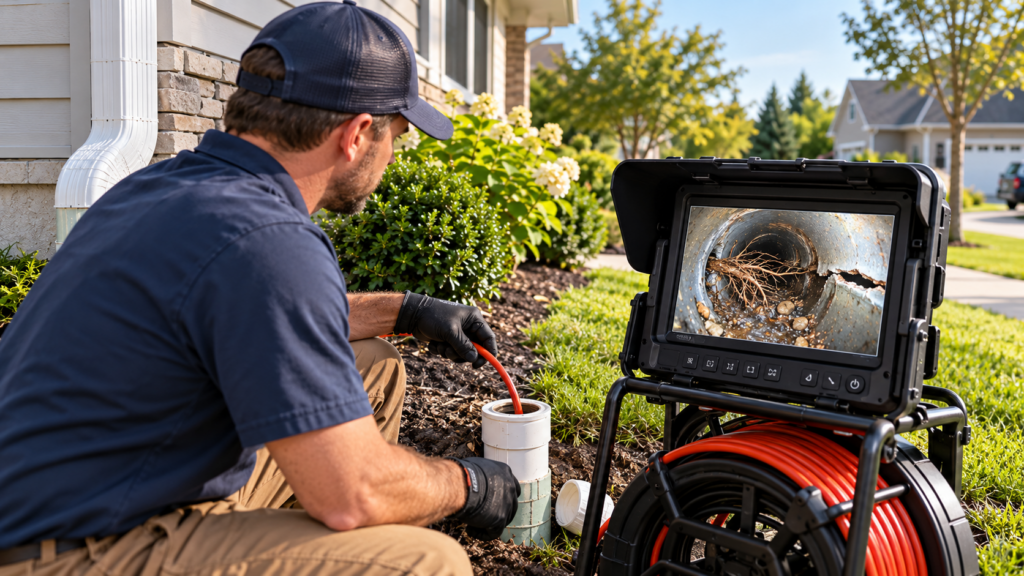
Sewer Flow offers professional camera inspection services for underground drainage and sewer piping. Whether a particular downspout drain can be inspected with a camera depends on its diameter, configuration, accessibility, and condition.
For example, a pipe packed with debris or crushed near its entrance may prevent the camera from reaching the remaining drainage system.
Where appropriate equipment can be used, locating tools may also help identify the approximate underground position of an inspected section.
Not every problem can be confirmed by video inspection alone. Small leaks, inaccessible sections, or drainage problems related to the outlet and surrounding ground may require additional evaluation.
What Happens After the Inspection?
The goal is to identify the likely cause of the drainage failure and recommend an appropriate response.
If the pipe is intact, cleaning may be sufficient. If the inspection reveals a separated connection, damaged section, or collapsed line, repair or replacement may be necessary.
We want homeowners to understand the condition of their drainage system before proceeding with work that may involve excavation or replacement.
Can an Underground Downspout Drain Be Repaired Without Replacement?
Yes. Not every underground downspout problem requires replacing the entire buried drainage line.
The appropriate repair depends on the location and extent of the damage, the condition of the remaining pipe, and whether the existing system has a suitable drainage route.
Cleaning an otherwise sound pipe may be enough when the primary issue is accumulated leaves, sediment, or another removable obstruction.
Professional drain-cleaning equipment can help clear blockages, although the cleaning method must be appropriate for the pipe’s material and condition.
Targeted underground drainage repair may be possible when damage is limited to a specific section or connection.
For example, if a relatively short portion of piping has cracked or separated while the remaining line is in usable condition, replacing the affected section may restore proper flow without requiring an entirely new drainage route.
Partial or complete underground downspout drain replacement becomes more likely when the pipe has extensive deterioration, multiple collapsed sections, or recurring problems related to its installation.
A drain that was improperly routed or installed with inadequate slope may need more than a localized repair. Correcting the layout can be necessary to prevent future standing water and blockages.
When excavation is required, underground utility safety must be part of the planning process. The Pennsylvania Public Utility Commission’s PA One Call guidance explains the state’s 811 requirements for identifying underground utilities before digging. Homeowners and contractors must make the required notification before excavation.
The best repair is not necessarily the one that replaces the most pipe. It is the one that corrects the actual failure and provides a suitable long-term drainage solution.
Why Are Underground Drainage Problems Common Around Pittsburgh Homes?
Pittsburgh and the surrounding Western Pennsylvania communities have several property characteristics that can make underground drainage problems particularly important to investigate.
Many neighborhoods contain older homes, mature trees, established landscaping, and drainage systems that may have been installed or modified decades ago.
Older properties can have buried drainage pipes whose original materials, routing, or discharge points are not immediately obvious. Previous owners may have extended downspouts underground, changed landscaping, or installed additional drainage connections.
Pittsburgh’s hills and uneven terrain can also influence where stormwater collects. A downspout serving a home on a sloped lot may discharge toward a lower portion of the property, where erosion, surface runoff, or saturated soil complicates drainage.
Mature trees, while valuable to neighborhoods, may introduce additional concerns when roots encounter aging or compromised underground piping.
Rainfall adds another layer of complexity.
Pittsburgh Water’s stormwater management guidance emphasizes the importance of managing runoff, reducing debris, and protecting properties from flooding and sewer backups.
A buried downspout pipe that handles moderate rainfall may still struggle when a stronger storm sends a greater volume of runoff through the system.
None of these characteristics automatically means a Pittsburgh home’s drainage pipes are damaged. They simply highlight why property-specific diagnosis matters.
A drainage solution that works for one home may not be appropriate for another property just a few streets away.
When Should You Schedule Professional Downspout Drain Repair?
A single puddle after an unusually heavy storm does not necessarily indicate a broken underground pipe. However, a drainage problem that repeatedly returns under similar conditions is a good reason to schedule an inspection.
We recommend having the system evaluated when water consistently overflows from a downspout’s underground connection, when previously functioning drainage stops working, or when wet soil and erosion develop along the buried pipe’s suspected route.
A professional evaluation is also worthwhile when cleaning temporarily resolves the problem but the blockage returns, particularly if roots, soil, or pipe deterioration may be involved.
Water collecting near the foundation deserves particular attention.
Repeated saturation around foundation walls can contribute to moisture intrusion, especially where basement waterproofing or existing drainage is already compromised.
If your basement becomes damp after rainfall and you notice water backing up outside near a downspout, the two symptoms may be related. However, basement leaks can have several causes, so an underground drainage inspection should be part of an accurate diagnosis rather than an assumption about what needs repair.
It is also important to distinguish a downspout drain issue from a sanitary sewer problem. Slow indoor fixtures, wastewater backups, or sewage odors may suggest a separate plumbing concern requiring different inspection and repair services.
The earlier an underground drainage problem is accurately identified, the easier it may be to choose a repair based on the actual pipe condition instead of repeatedly addressing visible symptoms.
Get Underground Downspout Drain Repair in Pittsburgh
If your underground downspout drain keeps backing up, your yard develops unexplained wet areas, or rainwater repeatedly collects around your foundation, Sewer Flow LLC can help determine what is happening beneath the surface.
We provide underground downspout drain cleaning, repair, and replacement services for homeowners throughout Pittsburgh and surrounding Western Pennsylvania communities.
Our goal is to identify whether the issue involves a blockage, structural pipe damage, or another drainage concern and recommend the work needed to restore proper water flow.
Contact Sewer Flow LLC to schedule an evaluation of your underground downspout drain and find out whether cleaning, targeted repair, or replacement is the right solution for your home.