
At Sewer Flow LLC, we get a lot of calls that start the same way: “It happened out of nowhere.” A basement floor drain overflow. A bathtub filling with dirty water. A toilet that won’t flush.
But in most Pittsburgh homes, a main sewer line backup doesn’t come out of nowhere there are usually warning signs in the days or weeks leading up to it. The key is knowing what to look for and how to respond before sewage shows up in the lowest drain in your home.
Below are the most common warning signs we see, what they typically mean, and what we recommend you do if you notice them.
Your home has smaller drain lines from sinks, tubs, and toilets that feed into a larger pipe; the main sewer line. That main line carries wastewater out to the municipal sewer (or your septic system).
When the main line starts to clog or collapse, wastewater can’t leave your home the way it should. So it does the next thing it can do: it backs up. And because water follows gravity, it often shows up first in the lowest fixtures:
Basement floor drains
Basement showers / tubs
Utility sinks
Ground-level tubs and toilets
That’s why a main line problem can feel like a “basement problem” even when the issue is happening outside the foundation.
If you’re seeing one of these signs, it might be a minor issue. If you’re seeing two or more, you should treat it as a likely main line restriction and act quickly.
A single slow sink usually points to a localized clog. But when we hear things like:
“The kitchen sink is slow and the tub is slow.”
“The toilet is flushing weird and the sink is backing up.”
…that’s when our team starts thinking main line.
Why it happens: A restriction in the main line affects everything connected to it. The slowest drains are often the ones farthest downstream or lowest in the home.
How urgent is it? Medium to high especially if it’s getting worse quickly.
Gurgling is one of the most overlooked early signs. Homeowners often assume it’s “just air in the pipes.”
In reality, when we hear about a toilet gurgling after using another fixture—like a sink draining or a washing machine running—it often points to air being displaced by trapped wastewater.
Common examples we hear:
Toilet gurgles when the shower drains
Bubbling in a tub drain when the toilet flushes
Laundry runs and a nearby toilet starts making noise
How urgent is it? Medium—high if it’s paired with slow drains or odors.
This is a big one.
If you flush the toilet and you see water rise or “burp” in a shower/tub drain, it’s often a sign the main line is restricted and the system is pushing water sideways into the next easiest opening.
Why it matters: This symptom is one of the strongest indicators that the issue isn’t a single drain—it’s the line they all share.
How urgent is it? High. This is where we recommend stopping water usage and getting help before it turns into an overflow.
A basement floor drain is often the first place a main line problem shows itself, because it’s low and it’s tied into the main drainage system.
Sometimes the early signs look subtle:
A damp ring around the drain
Occasional seepage after heavy water use
“Burping” sounds
A small amount of dirty-looking water that appears and disappears
If you ignore it, that “small amount” can become a full backup when you run laundry, take a long shower, or have guests over using bathrooms.
How urgent is it? High—especially if the water looks gray or smells like sewage.
Sewer smells can happen for a few reasons, and not all of them are a main line emergency. But when odor shows up alongside slow drains, gurgling, or water movement in fixtures, we pay attention.
Here’s a quick way we explain it:
Dry trap smell: Often happens when a floor drain hasn’t been used in a while and the water in the trap evaporates. The smell can improve after adding water.
Backup-related odor: Stronger, nastier, and often paired with sluggish drains or bubbling. Sometimes homeowners notice the smell gets worse after using water.
If your basement suddenly smells like sewage and drains are acting up, don’t ignore it.
How urgent is it? Medium to high depending on what else is happening.
A toilet that flushes weakly, leaves a high water level, or “acts clogged” repeatedly can be a sign of main line restriction—especially when other drains aren’t acting normal either.
What we often hear:
“We plunged it and it worked… for a day.”
“It’s not totally clogged, it just flushes slow.”
“The water level keeps changing.”
If the problem keeps returning, it’s time to look deeper than the toilet.
How urgent is it? Medium—high if it’s happening with multiple fixtures.
One week it’s the tub. Next week it’s the kitchen sink. Then it’s the toilet again.
When clogs pop up in different places over time, it often means there’s a partial obstruction in the main line that’s catching debris and slowing flow—then temporarily “letting go,” only to build up again.
How urgent is it? Medium—high (because recurrence usually means the cause hasn’t been solved).
A washing machine dumps a lot of water fast. So do long showers, dishwashers, and multiple people using bathrooms.
If your drains “mostly behave” until you do laundry—and then you hear gurgling, see water rise in a tub, or notice the floor drain getting wet—that’s a strong sign the system is struggling to move water through a restricted main line.
How urgent is it? High if heavy water use triggers symptoms.
When homeowners call Sewer Flow, we often start with a few quick questions. You can use the same logic:
Only one sink/tub/toilet is slow
No other fixtures are affected
No gurgling or bubbling is happening elsewhere
Two or more drains are slow at the same time
Toilets gurgle or drains bubble
Flushing affects a tub/shower drain
Water is showing up at the basement floor drain
The problem is recurring even after “fixes”
And one more rule of thumb we tell people:
If you flush a toilet and water rises somewhere else, don’t keep testing it—stop using water and get it checked.
If you suspect a main line backup is developing, here’s what we suggest doing right away.
This is the most important step. Don’t:
Run laundry
Take showers
Run the dishwasher
Keep flushing “to see if it clears”
Every gallon you send down the drain has to go somewhere. If it can’t exit the main line, it can end up in your basement.
Look at:
Basement floor drain
Basement shower/tub
Utility sink area
If you see water rising or signs of seepage, treat it as urgent.
We don’t recommend chemical drain cleaners for suspected main line issues. They often:
Don’t reach the clog effectively
Can damage pipes (especially older lines)
Create hazards if sewage backs up and splashes
We recommend calling a professional if:
Multiple drains are slow
You see water in the tub/shower when flushing
The basement floor drain is wet or rising
The issue keeps returning
You smell strong sewage odors with other symptoms
If sewage is already present, keep kids and pets away from the area and limit exposure.
When we run a camera inspection, here are the causes we most commonly find in our area:
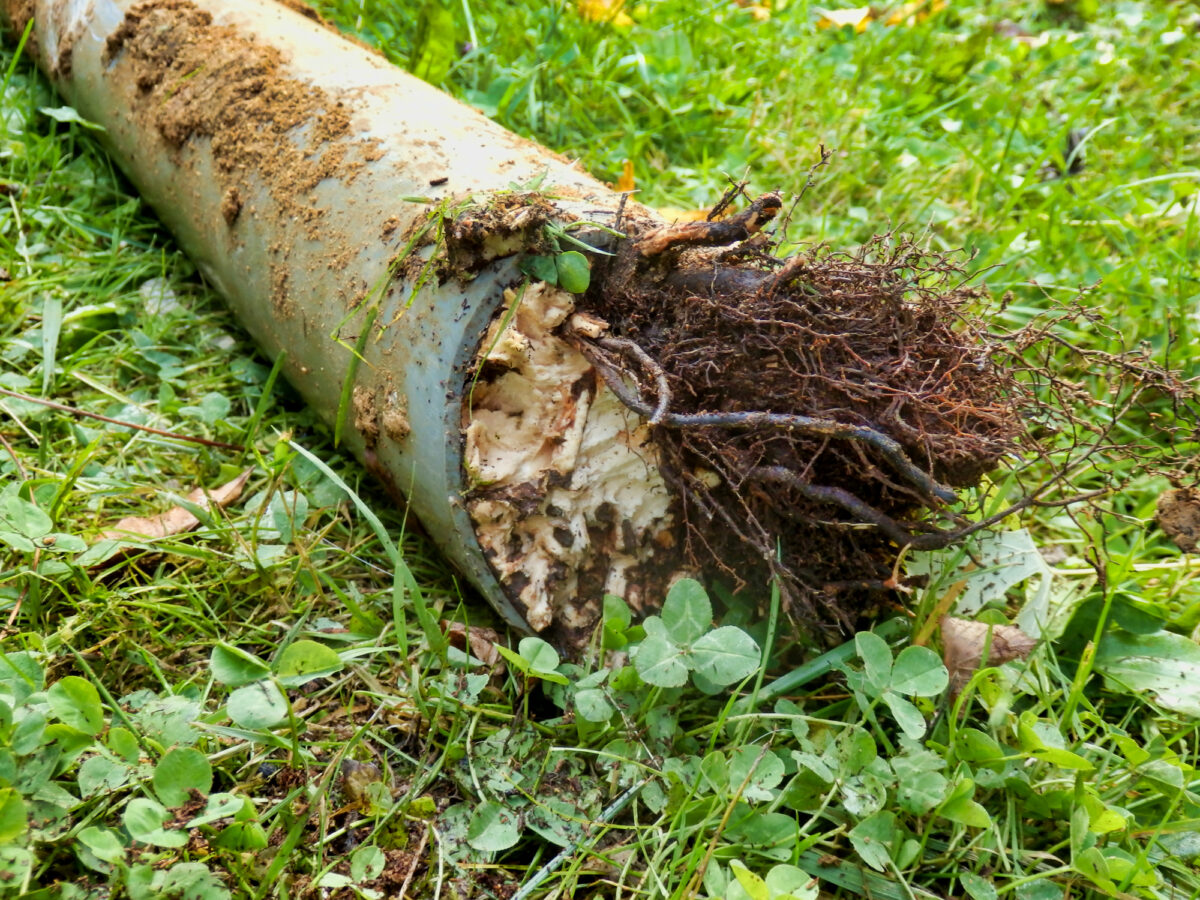
Pittsburgh has plenty of mature trees, and roots love moisture. Small cracks or joints in older lines can become entry points—then roots expand and catch debris.
Grease doesn’t stay liquid in pipes. Over time it cools, sticks, and narrows the line—then one “big water day” triggers the backup.
Some sewer lines develop low spots where water sits. That standing water slows flow and collects solids until the line can’t keep up.
Older materials can shift or deteriorate. Once the pipe is compromised, clearing the symptom isn’t the same as solving the cause.
Even products labeled “flushable” can tangle and build up in sewer lines—especially where there are roots or rough pipe interiors.
If you’re dealing with repeat backups or warning signs, the best thing you can do is stop guessing. At Sewer Flow, our approach is simple:
We listen to the symptom pattern (what’s slow, when it happens, what triggers it)
We clear the line properly based on what we’re dealing with
We recommend a sewer camera inspection when it makes sense—because the camera shows what’s actually happening inside the line
A camera inspection is how we confirm whether the problem is:
roots
heavy buildup
a belly/sag
collapsed or offset pipe
another structural issue
That information helps you choose the right solution instead of repeating the same temporary fixes.
Sometimes a partial blockage “lets go” temporarily, but if the cause is roots, sagging pipe, or buildup, it usually comes back—often at the worst time.
Not always. But if gurgling is paired with multiple slow drains or water movement in other fixtures, it’s a strong indicator something is restricting flow.
Washing machines dump a large volume of water quickly. If the main line is restricted, that sudden surge can push water back to the lowest drains.
We don’t recommend it for suspected main line issues. It usually doesn’t solve the problem and can create safety risks if water backs up.
If it’s your first issue and it resolves cleanly, maybe not. But if it’s recurring—or if you’ve had basement floor drain activity—camera inspection is often the smartest next step.
If you’re noticing two or more warning signs—multiple slow drains, gurgling toilets, water rising in a tub when you flush, basement floor drain seepage—don’t wait for it to turn into sewage on the basement floor.
At Sewer Flow LLC, we help homeowners across the Pittsburgh area identify what’s really happening, clear the issue safely, and recommend next steps that actually prevent repeat backups.
If you think your main line is starting to back up, give us a call before it becomes an emergency.