
Most homeowners don’t realize just how much water their roof sheds during an average rainstorm—let alone what happens when that water has nowhere to go.
In Pittsburgh and Western PA, where rainfall is frequent and heavy, clogged gutters can overflow hundreds of gallons of water in a single storm. When that water spills directly onto your foundation, it becomes one of the leading causes of basement moisture, foundation cracking, and interior water intrusion.
Below, we break down the numbers, the risks, and why regular cleaning and gutter repair services from Sewer Flow LLC are essential for keeping your basement dry.
Roofs are designed to shed water efficiently. Every inch of rain that falls on your home ends up somewhere—either safely carried away through your gutter system or dumped directly along your foundation if your gutters are damaged or clogged.
According to long-term climate data from the National Weather Service, the Pittsburgh region receives an average of 38 to 41 inches of rainfall per year. Storms often bring 1–2 inches at a time, and heavy downpours can quickly overwhelm a compromised gutter system.
When gutters fail, the entire drainage strategy of your home fails with them.
To understand how much water overflows from clogged gutters, we need to look at the math. Fortunately, the calculation is simple.
This number comes from the volume of water produced by 1 inch of rainfall spread across a one-square-foot area.
Most single-family homes in Western PA have a roof area between 1,500 and 2,000 sq. ft. Using that range, let’s calculate:
1,500 × 0.623 = 934.5 gallons
2,000 × 0.623 = 1,246 gallons
Even a mild, 1-inch storm can dump nearly 1,000–1,250 gallons of water onto your home.
1,869 – 2,492 gallons
Heavy Downpour (3 Inches or More):
To visualize this, imagine filling 50–70 standard 55-gallon rain barrels during a single storm.
If your gutters are clear and your downspouts are functioning correctly, the water is carried safely away from your home. But if they’re clogged—or if your downspouts are broken or disconnected—that massive volume of water is dumped directly at the base of your foundation.
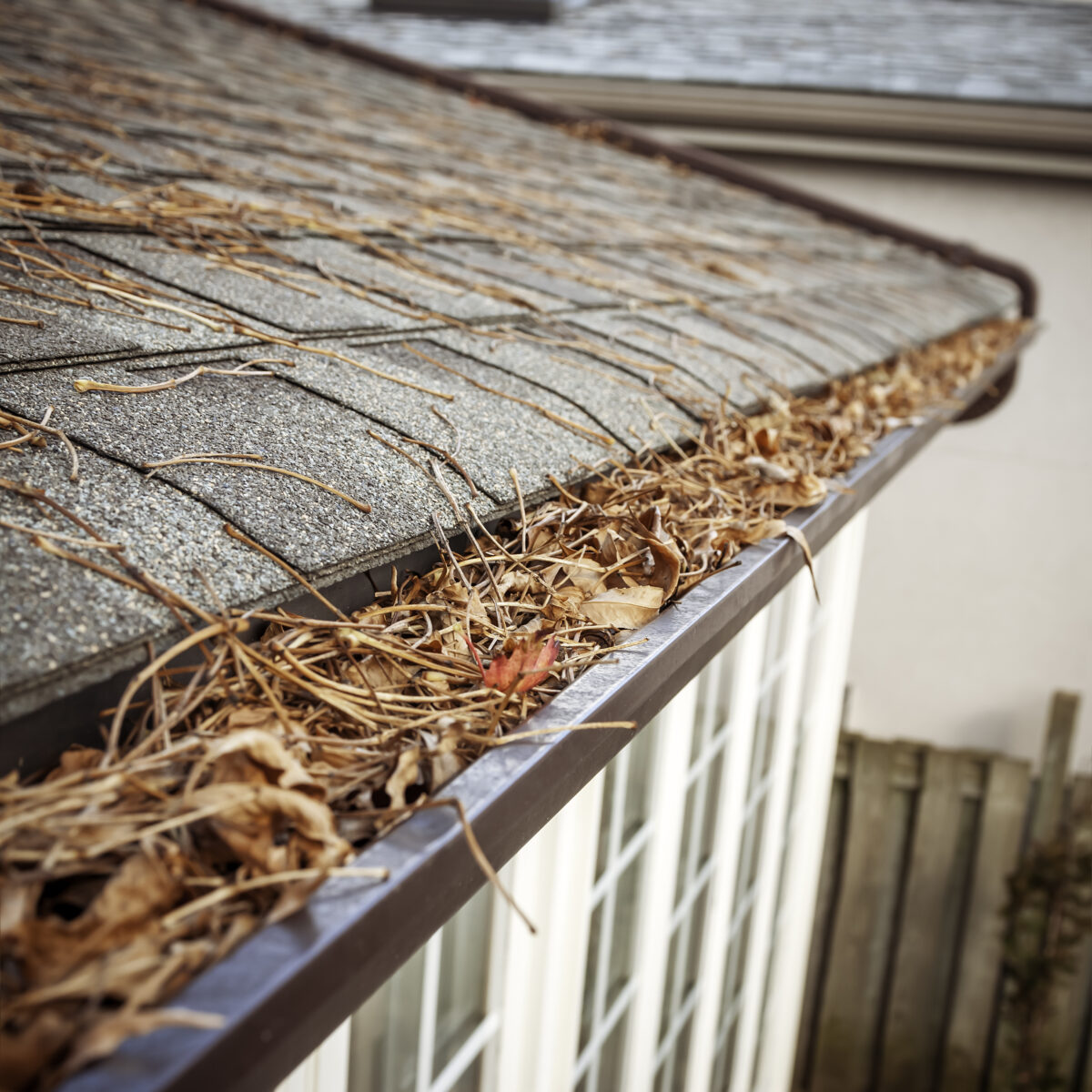
Gutters don’t take long to back up. When debris—such as leaves, twigs, seedlings, and shingle grit—blocks the trough or downspout, water begins to spill over the edges almost instantly.
It also concentrates roof runoff in the worst possible place: directly at the edge of your foundation. Even a small blockage in one section of the gutter can cause overflow along 20–30 feet of the roofline.
Now that we know how much water lands on your home and how quickly it overflows, let’s examine the consequences.
When soil around your foundation absorbs too much water, it expands and presses against the walls. This pressure is one of the main reasons basements crack and bow over time.
2. Foundation Cracks and Structural Issues
3. Water Seeping Into the Basement
4. Mold and Humidity Problems
High moisture levels feed mold growth and create an unhealthy indoor environment—especially in basements and below-grade living spaces.
Clay soils hold water longer, increasing pressure and making overflow more dangerous.
Clogs are the most common reason gutters overflow, but several other issues can contribute:
Gutters must slope toward the downspout. Even a slight sag creates standing water and overflow.
Heavy debris or ice pulls gutters downward, reducing capacity and trapping water.
When hangers pull away from the fascia, gaps form—allowing water to spill behind the gutter.
If downspouts don’t extend 4–6 feet from the home, water pools directly at the foundation.
Older sectional gutters often leak at seams long before they overflow.
Some older homes still have 4″ or 5″ gutters that can’t handle modern rainfall intensity.
This is why professional inspections and downspout repair in Pittsburgh are essential for effective drainage.
Preventing overflow is a combination of proper maintenance and smart improvements.
1. Follow a Professional Gutter Cleaning Schedule
These minor issues can lead to huge water problems.
While not perfect, they significantly reduce debris buildup—especially leaves and twigs. They still require occasional cleaning, but the frequency has been dramatically reduced.
Sewer Flow LLC specializes in downspout repair and downspout extensions, which ensure water moves safely away from your foundation.
A trained professional, like ours at Sewer Flow, can diagnose and repair the issue before it leads to significant basement damage.
When a single storm can dump 1,000–3,500 gallons of water onto your roof, even a small clog becomes a serious threat. Overflowing gutters almost always send that water straight to the foundation—the worst place for moisture to collect.
Routine cleaning, maintenance, and professional gutter repair services protect your basement, preserve your foundation, and prevent costly water damage repairs.